Jazz Composers Orchestra Institute Readings: Composer Spotlight - Brian Friedland
Composer and pianist Brian Friedland’s recordings include compositions for chamber orchestra, big band, strings, brass, saxophone quartet, prepared piano, and many small jazz groups. While rooted in jazz piano traditions, he exhibits a wide range of influences in his music, from Balkan Folk to classical minimalism. Brian has released three albums, performed at venues across the US and internationally, and frequently performs and collaborates in his hometown of Boston. Grammy-nominated composer and musical collaborator Kim Richmond describes Brian's music as “not only professional quality material, but inspirationally crafted, an excellent and interesting mix of art works. He shows his dedication towards creating and performing new music.”
Brian participated in last year's Jazz Composers Orchestra Institute Summer Intensive and was selected for the JCOI Readings on Thursday, June 16, 7:30pm at Miller Theatre, Columbia University for his piece Dreamscapes.

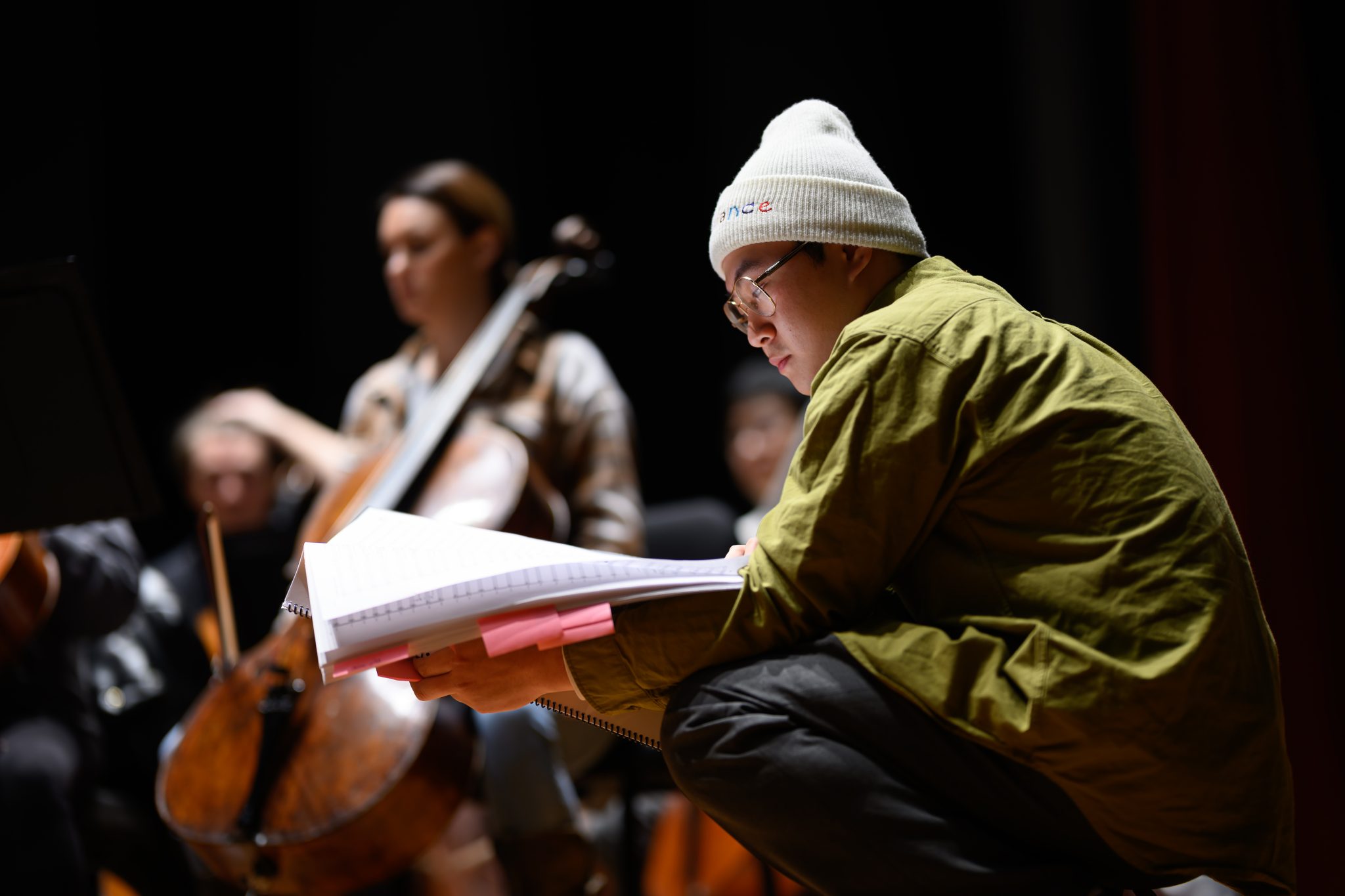
Composer and pianist Brian Friedland
American Composers Orchestra: Can you talk about the challenges of writing jazz music and other non-traditional forms for orchestra? What do you believe is the biggest payoff?
Brian Friedland: One of the biggest challenges is translating the ideas I'm exploring in my head or on the piano, to a full realization for orchestra. There's a much greater range of sounds available then in any other situation I can think of, and to imagine ideas that are not necessarily idiomatic of orchestra makes me feel like I'm often leaping into the unknown. Translating the rhythmic drive and compositional underpinning I'm used to hearing from a rhythm section is a particular challenge of moving from a jazz ensemble to an orchestra.
I think they biggest pay off is that my composing and improvising will be enriched from the process of writing for orchestra. I think I will hear a wider range of textural possibilities and that the studying of orchestral music has put different kinds of melodic, harmonic, rhythmic ideas in my head. On a different level, my composing for non jazz instruments and utilizing full wind and brass sections is much better understood. I couldn't have correctly answered the correct ranges and tone colors for oboe and english horn before undertaking the piece.
ACO: Can you talk about your process of composing by transcribing your own improvisations? Do you set up a harmonic structure or "skeleton" to improvise off of?
BF: I record often when I am improvising, it helps me go back and identify my strongest ideas as well as material to throw away. I never use the improvisation in its original form, there is a lot of tinkering as I come up with melodic and rhythmic variations and different harmonizations. Usually I have the idea 90 percent formed before I attempt to write anything down. When I go to write things down and commit it many small details can change, but the basic direction has been formed through a lot of trial and error. Sometimes will have several pieces fully formed and will improvise many different transitions between them in order to figure out the best overall flow.
ACO: What are you looking forward to about the readings?
BF: I can't wait to hear what this piece I have spent hundreds of hours with actually sounds like! Of course, it will be incredibly inspiring to hear my colleagues' approaches to writing for orchestra.
ACO: What has your experience in the Jazz Composers Orchestra Institute been like so far?
BF: Incredible! The workshop was as inspiring a musical situation as one can ever hope to find themselves. Conversing with so many brilliant and diverse teachers and highly knowledgeable and accomplished participants left me feeling more committed to composing large ensemble music and fueled me with ambition for new projects.
Learn more about Brian at www.brianfriedland.com
Public funds are provided by the New York City Department of Cultural Affairs in partnership with the City Council, and the New York State Council on the Arts with the support of Governor Kathy Hochul and the New York State Legislature, Office of Brooklyn Borough President Reynoso, and the National Endowment for the Arts.