EarShot Jacksonville Symphony Readings: Composer Spotlight - Ursula Kwong-Brown
Ursula Kwong-Brown (b. 1987) is a composer and media artist from New York City. Described as “atmospheric and accomplished” by The New York Times, her work has been performed in diverse venues including Carnegie Hall, Le Poisson Rouge, Miller Theatre and the Manhattan Movement & Arts Center in New York, the National Portrait Gallery, and the Victoria & Albert Museum in London. Awards include a 2017- 2019 fellowship with the Berkeley Symphony, the 2016 George Ladd Prix de Paris Prize, the 2015 Composers, Inc. BAMM Prize, and the 2014 Bowdoin Festival Prize, as well as honors from ASCAP, the New York Composers’ Circle and the Chicago Ensemble. Plans for 2018 include new works for both the Berkeley Symphony and the UC Berkeley Symphony. Currently, Ursula is finishing a Ph.D. in New Media & Music at UC Berkeley with support from a Mellon-Berkeley fellowship.
Ursula was selected for the EarShot Jacksonville Symphony Readings for her piece Night and Day, which will be workshopped and conducted by Music Director Courtney Lewis in a final performance on Friday, April 20 at 8PM. Details here
Ursula spoke with us about the piece and what she looks forward to at the readings.

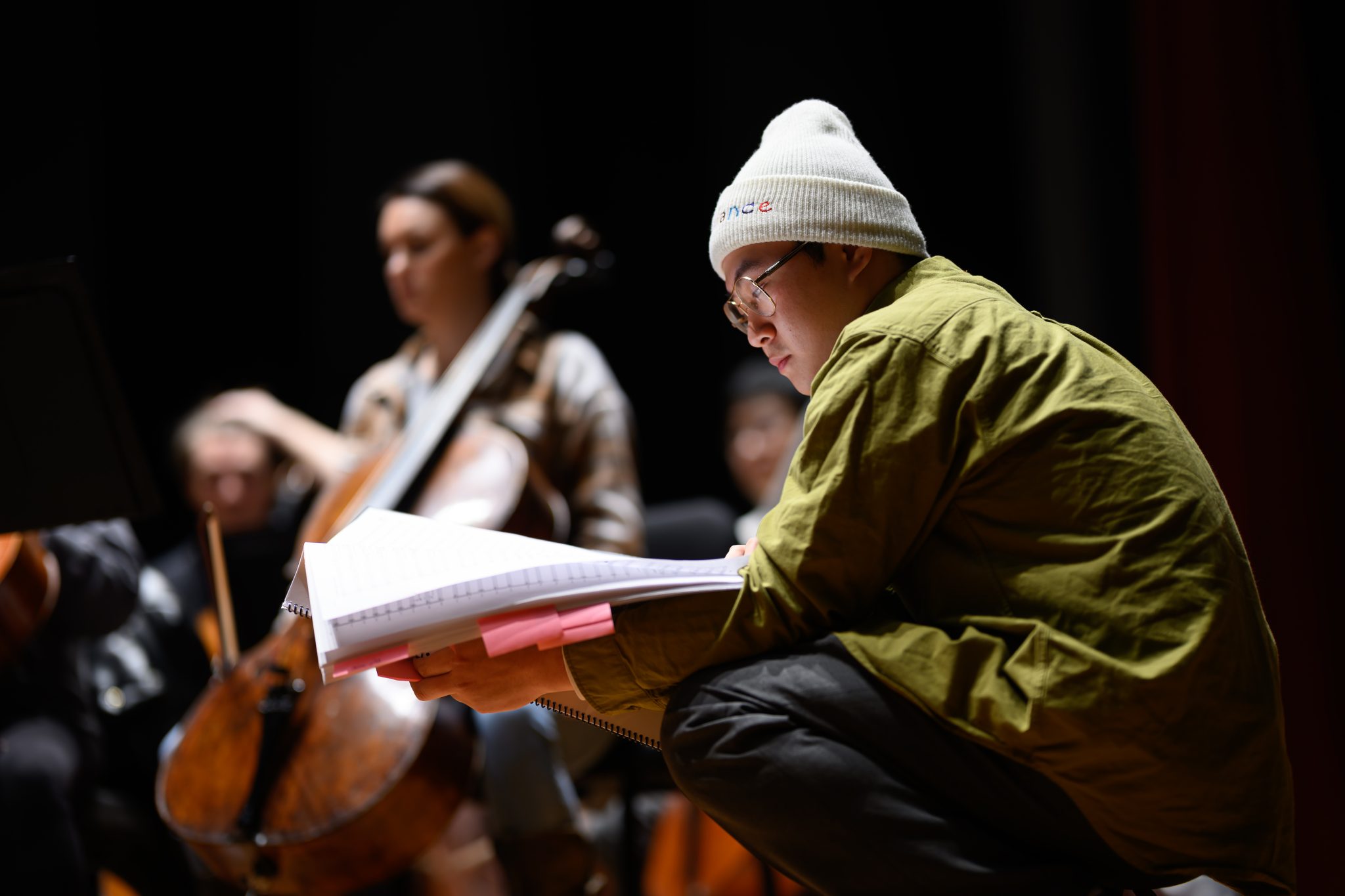
Composer Ursula Kwong-Brown
American Composers Orchestra: What was your reaction to finding out that your piece had been selected for the EarShot Jacksonville Symphony Readings? What are you looking forward to about the program?
Ursula Kwong-Brown: I was super excited to find out that my piece Night and Day had been selected for the EarShot Jacksonville Symphony Readings. I’ve never heard this work performed before - not even a rehearsal - so I am very much looking forward to hearing it for the first time. Also, I’m looking forward to working with my mentor composer, Steve Mackey, and getting feedback from the orchestral musicians. I just met my fellow composers in the hotel restaurant here in Jacksonville, and I am excited to get to know them and to hear their works, too.
ACO: Your experience includes some fantastic projects that are far removed from the concert hall, including your sound-art installation Chromatic Counterpoint and research on production and perception of musical intervals in African clawed frogs for Columbia University. Can you talk about why these experiences have been important for you as a composer? Do you think they affect your approach when it comes to writing a conventional orchestral work?
UKB: It’s funny because I rarely think about the influence of my background in science on my compositions, but I think there is a connection between the textures and timbres in the “Night” section of my piece and the many hours that I spent recording and analyzing the calls of crickets and frogs in the nighttime.
ACO: Your piece Night and Day is split into two sections, night in the first half, day in the second. From your program note it seems as if these two sections will contrast quite a bit. What, if any, are the musical elements that tie them together? Is the piece trying to show similarities between night and day, as well as differences?
UKB: Excellent question. To be honest, I really think of this piece as having two separate parts. The one conscious connection that I made was in the orchestration: both start with pizzicato in the strings, but use the pizzicato in very different ways.
ACO: What aspects of your piece do you hope to improve or fine tune during the readings?
UKB: It’s hard to say without hearing the piece, but I am open to any and all possible improvements! From the more technical aspects of orchestration to the more musical questions of motivic development.
The EarShot Jacksonville Symphony Readings culminate in a final performance on Friday, April 20 at 8PM. Details here
Learn more about Ursula at www.ursulakwongbrown.com
Public funds are provided by the New York City Department of Cultural Affairs in partnership with the City Council, and the New York State Council on the Arts with the support of Governor Kathy Hochul and the New York State Legislature, Office of Brooklyn Borough President Reynoso, and the National Endowment for the Arts.