EarShot Jacksonville Symphony Readings: Composer Spotlight - Nicholas Bentz
Nicholas Bentz (b. 1994) is a composer and violinist whose music often takes its inspiration from pieces of literature and poetry, film, and visual art. He has received several esteemed commissions and performances of his music, was Composer-in-Residence for Symphony Number One’s 2016-17 season, and was a finalist for the ASCAP Morton Gould Young Composer Awards in 2014. Nicholas is currently pursuing a Master’s degree in violin at Peabody Institute and studying composition privately with composer Felipe Lara.
Nicholas was selected for the EarShot Jacksonville Symphony Readings for his piece E.W. Korngold Goes to Nikkatsu, which will be workshopped and conducted by Music Director Courtney Lewis in a final performance on Friday, April 20 at 8PM. Details here
Nicholas spoke with us about the piece and what he looks forward to at the readings.

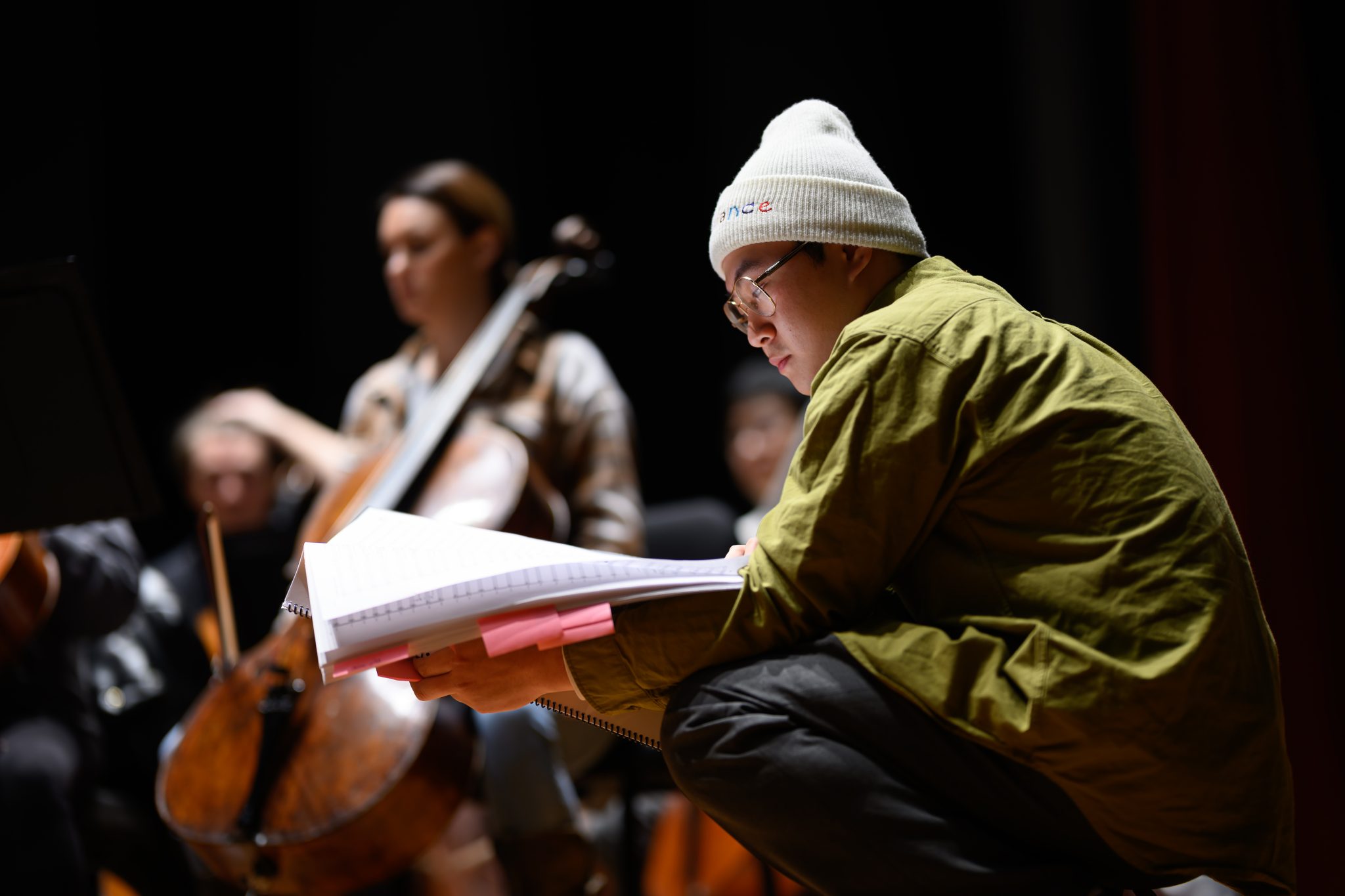
Composer and violinist Nicholas Bentz
American Composers Orchestra: What was your reaction to finding out that your piece had been selected for the EarShot Jacksonville Symphony Readings? What are you looking forward to about the program?
Nicholas Bentz: When I first found out, I was floored! The orchestral stage is one of the largest for a composer, and it's a steep learning curve that we have to figure out extremely quickly. ACO provides such an amazing program in that you get to learn from your fellow composers as well as mentor composers that have already mastered the game, so to say. I'm really excited to dig into my piece and to see what things I can tinker around to better approach the sound I want to hear. As great as MIDI has become, it doesn't compare to a full orchestra!
ACO: You are both a composer and a performer, with extensive experience studying and playing the violin. How does the performing aspect of your career affect the way you write music? Do you compose on the violin?
NB: I think that being a performer can only positively influence you as a composer. Being an active performer allows you to go through and really get to know so many pieces on a different level. I've always treated orchestra rehearsals like orchestration lessons, seeing what works in the orchestra and what doesn't - seeing what kinds of gestures require additional rehearsal time, and which ones can be executed correctly the first time. Being a performer also forces me to think about the physicality and psychology of the players. I've played through enough pieces where I feel like my part is either extraneous or overbearing, and it's hard to connect to a piece in which you feel that way. I actually don't compose on the violin oddly enough, even though it's easily the instrument I'm the most comfortable on. I oftentimes find myself controlled by the idiomatic nature of the instrument if I ever do try.
ACO: Your program note says that your piece E.W. Korngold Goes to Nikkatsu is based on the idea of using Korngold's musical style to score a Nikkatsu film. Can you talk about the result of combining these two artists' styles into one piece? Did it end up different than you expected when you first had the idea?
NB: When I first set out with the idea of a piece based on the combination of Korngold and Suzuki, I was more than a little apprehensive. I didn't know if there was much overlap between the two artists that I could utilize for myself, but as I watched more and more Suzuki, and got more accustomed to his frenetic and high-octane style, the more comfortable the idea became. The piece definitely came out much different than I planned (which is never a bad thing)!
ACO: What aspects of your piece do you hope to improve or fine tune during the readings?
NB: I definitely have a few gestures and textures that I want to see if I got right, and how to make them more like what I hear. It's also always good to look towards possible balance issues and to see how those work out, and how I can best improve those situations.
The EarShot Jacksonville Symphony Readings culminate in a final performance on Friday, April 20 at 8PM. Details here
Learn more about Nicholas at www.nicholasbentz.net
Follow him on Soundcloud and Facebook
Public funds are provided by the New York City Department of Cultural Affairs in partnership with the City Council, and the New York State Council on the Arts with the support of Governor Kathy Hochul and the New York State Legislature, Office of Brooklyn Borough President Reynoso, and the National Endowment for the Arts.