Berkeley Symphony EarShot Under Construction Readings Composer Spotlight – Composer Ruben Naeff

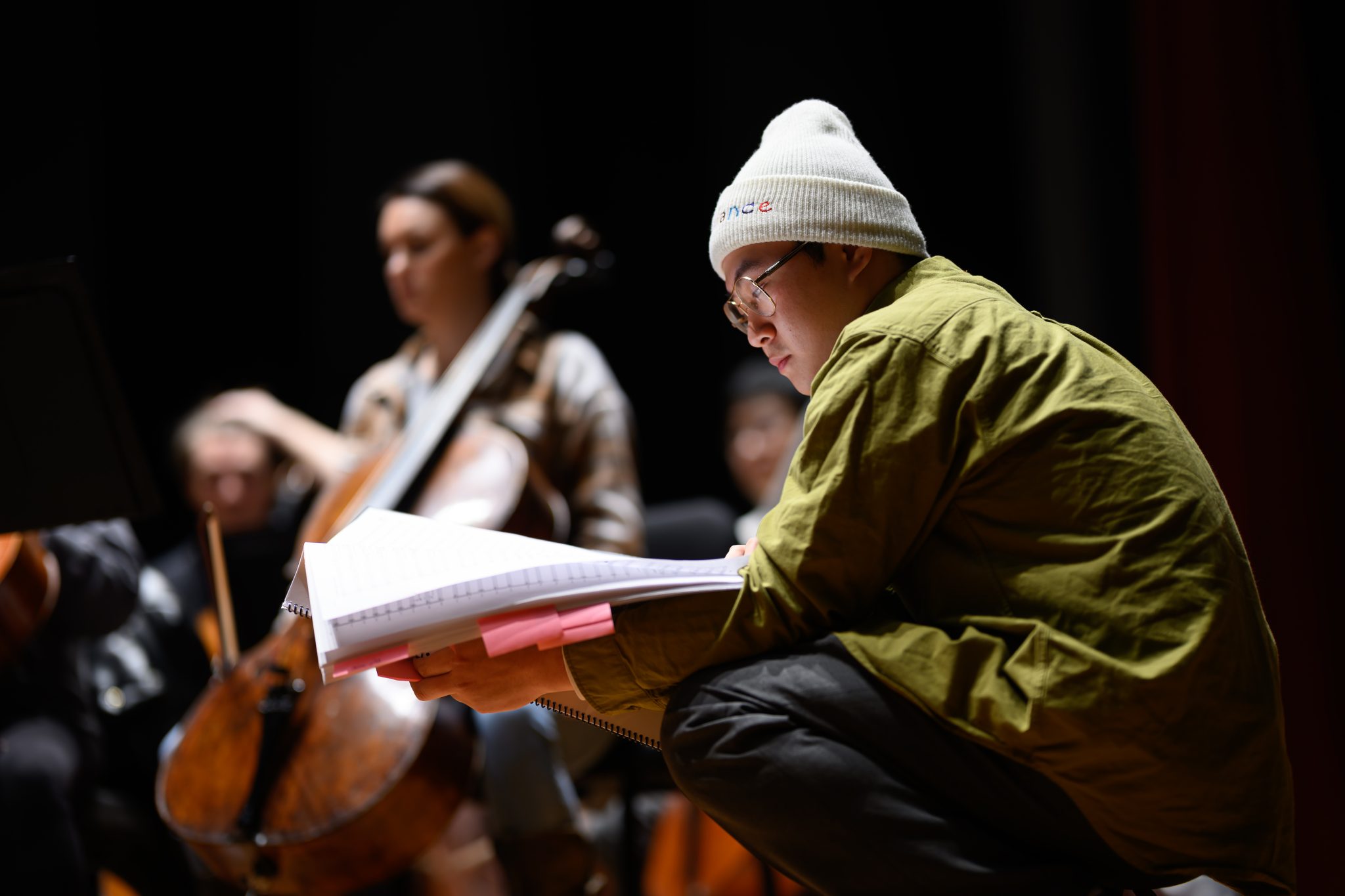
Composer Ruben Naeff Photo: Elsbeth Tijssen
In this interview with composer Ruben Naeff, find out how a great literary work inspired his latest composition, Danse Macabre, which will be read at the Berkeley Symphony EarShot Under Construction New Music Readings this weekend.
American Composers Orchestra: What was the inspiration for your composition? How would you describe your composition process?
Ruben Naeff: Moby Dick! This year I worked with my friends from West 4th New Music on an oratorio about Moby Dickthat will be performed by Contemporaneous during the MATA Interval Series on February 21st in New York. I decided to select a few passages from my movements and develop the material into a larger, unified work for orchestra. The composition process is always a mysterious activity: I am changing musical fragments that I already have into as many variations as I can come up with and then I select the ones that get me tick. I am basically chasing the most beautiful or exciting musical moments. It remains very abstract what beautiful or exciting actually means. It happens very often that my initial starting point -- Moby Dick in this case -- is not present anymore at a later stage. That doesn't matter: I care about the notes, and the rest is secondary. In this case I ended up with something that reminded me most to a dance with death, or a Danse Macabre, as it is called.
ACO: Since the selection of your work for the Berkeley Symphony EarShot Under Construction New Music Readings, how have you further developed your piece in preparation for the readings?
RN: Ask a composer for an existing piece and he will give you a new one -- that is what composers do, right, compose new music. So my piece wasn't selected as it did not exist at that time yet. But as I wrote above, it was based on another piece that I recently wrote.
ACO: What do you hope to get out of this experience of having your piece read by the Berkeley Symphony and in working with the mentor-composers?
RN: As much advice as possible, on every possible concept of composing. Obviously technical things on orchestration, or practical things on score preparation, but also artistic comments on the musical material, its development, its form -- everything.
ACO: What are you most looking forward to in participating in these New Music Readings?
RN: Getting to know great musicians, both performers and composers, both my peers and my mentors, and talking about music as long as we can. That, and of course hearing my new piece performed by this stellar orchestra, and learning about the million things I could have done better. And the best part is: those are the million things that I actually will do better, since there is time to improve my piece for the second reading. That opportunity is in one word amazing, and in two words extremely rare.
ACO: What would you like to say to other composers who may be interested in applying to future New Music Readings?
RN: Don't hesitate, apply!
Public funds are provided by the New York City Department of Cultural Affairs in partnership with the City Council, and the New York State Council on the Arts with the support of Governor Kathy Hochul and the New York State Legislature, Office of Brooklyn Borough President Reynoso, and the National Endowment for the Arts.