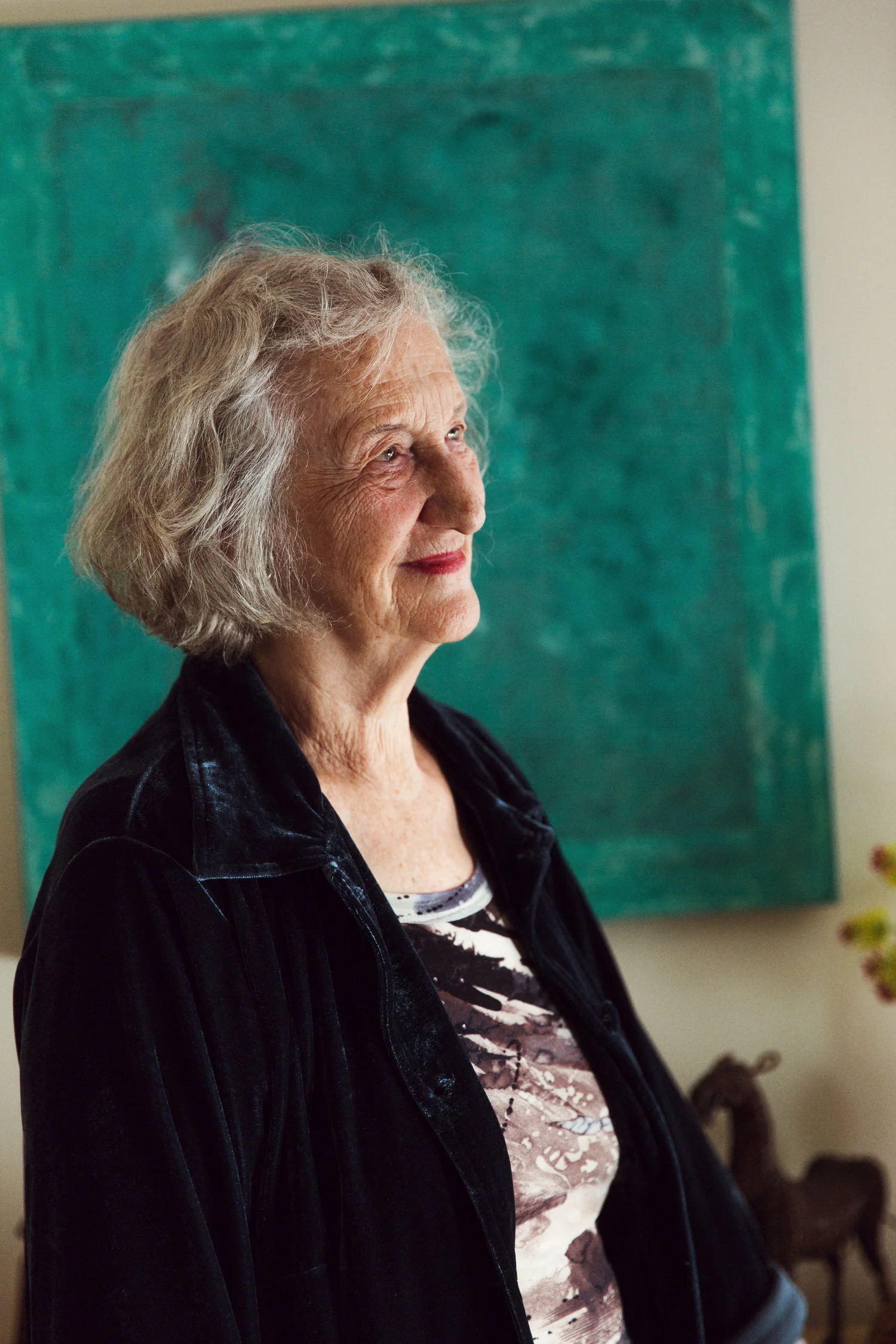
Thea Musgrave
As the world celebrates the centennial of Scottish-American composer Thea Musgrave, we honor one of the most influential and enduring voices in contemporary classical music. Across a remarkable career spanning nearly eight decades, Musgrave has created an extraordinary body of work encompassing opera, orchestral music, chamber music, choral works, ballet, and concertos, earning international acclaim for her imagination, dramatic power, and fearless originality. Even as she prepares to celebrate her hundredth birthday, she continues to compose at the highest level, a testament to a creative spirit that remains as vital and inventive as ever.
A student of Nadia Boulanger and a contemporary of figures such as Benjamin Britten, Musgrave forged a singular artistic path, becoming one of the first women to achieve sustained international success as a composer. Her groundbreaking operas - including Mary, Queen of Scots, Harriet, the Woman Called Moses, Simón Bolívar, and A Christmas Carol - expanded the possibilities of musical storytelling, while her innovative "dramatic-abstract" concertos transformed the relationship between soloists, orchestra, and stage, creating a theatrical dimension within purely instrumental music.
Musgrave’s achievements have been recognized with some of the highest honors in music, including the Queen’s Medal for Music, the Ivors Classical Award, the Royal Society of Edinburgh Award, a CBE, and Honorary Membership in the Royal Philharmonic Society. Her works have been performed at the world’s leading venues and festivals, from Carnegie Hall and Lincoln Center to the Royal Albert Hall, the Edinburgh International Festival, and Beyond.
Thea Musgrave’s legacy is one of imagination, courage, innovation, and generosity, and its influence will continue to be felt for generations to come.