Miriam Gideon

Miriam Gideon (1906–1996) was born in Greeley, Colorado, where her father, who had been also ordained as a Reform rabbi, was a professor of philosophy and modern languages.

She studied organ with her uncle Henry Gideon and piano with Felix Fox. She also studied with Martin Bernstein, Marion Bauer, Charles Haubiel, and Jacques Pillois. She studied harmony, counterpoint, and composition with Lazare Saminsky and at his suggestion also composition with Roger Sessions, after which she abandoned tonality and wrote in a freely atonal or extended post-tonal style.

Gideon moved to New York City, where she taught at Brooklyn College, City University of New York (CUNY) from 1944 to 1954 and City College, CUNY from 1947 to 1955. She then taught at the Jewish Theological Seminary of America at the invitation of Hugo Weisgall in 1955, and at the Manhattan School of Music from 1967 to 1991. She was rehired by City College in 1971 as full professor and retired in 1976.

In 1949 Gideon married Brooklyn College assistant professor Frederic Ewen. Both were political leftists. Ewen, who refused to testify before the Rapp-Coudert Committee in 1940, was summoned to testify before the Senate Internal Security Committee chaired by Democratic Senator Pat McCarran in 1952. He retired to avoid testifying. Miriam Gideon was investigated by the FBI, and in 1954 and 1955 she resigned from her music teaching posts at City College and Brooklyn College.

Gideon composed a lot of vocal music, setting texts by Francis Thompson, Christian Morgenstern, Anne Bradstreet, Norman Rosten, Serafin, Joaquín Quintero and others.[1] Selected compositions include Lyric Piece for Strings (1942), Mixco (1957), Adon Olom, Fortunato, Sabbath Morning Service, Friday Evening Service, and Of Shadows Numberless (1966).

She was the second woman inducted into American Academy and Institute of Arts and Letters in 1975, following Louise Talma who was inducted in 1974.
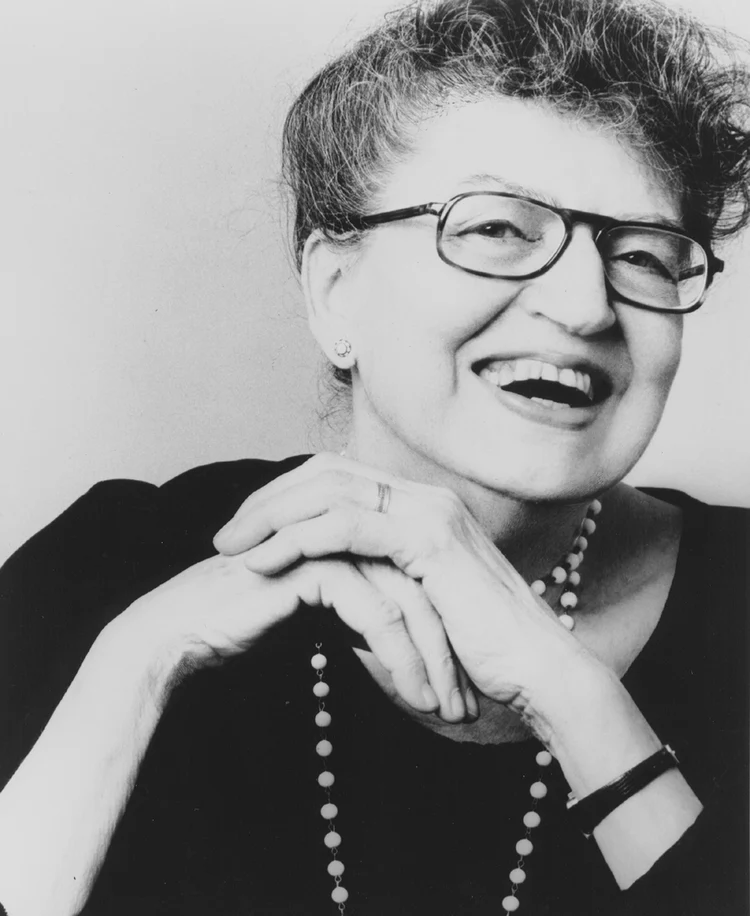
Miriam Gideon (October 23, 1906 – June 18, 1996) was an American composer.

Featured Events

What’s a Rich Text element?

What’s a Rich Text element?

The rich text element allows you to create and format headings, paragraphs, blockquotes, images, and video all in one place instead of having to add and format them individually. Just double-click and easily create content.

The rich text element allows you to create and format headings, paragraphs, blockquotes, images, and video all in one place instead of having to add and format them individually. Just double-click and easily create content.

Static and dynamic content editing

Static and dynamic content editing

A rich text element can be used with static or dynamic content. For static content, just drop it into any page and begin editing. For dynamic content, add a rich text field to any collection and then connect a rich text element to that field in the settings panel. Voila!

A rich text element can be used with static or dynamic content. For static content, just drop it into any page and begin editing. For dynamic content, add a rich text field to any collection and then connect a rich text element to that field in the settings panel. Voila!

How to customize formatting for each rich text

How to customize formatting for each rich text

Headings, paragraphs, blockquotes, figures, images, and figure captions can all be styled after a class is added to the rich text element using the "When inside of" nested selector system.

Headings, paragraphs, blockquotes, figures, images, and figure captions can all be styled after a class is added to the rich text element using the "When inside of" nested selector system.

What’s a Rich Text element?

What’s a Rich Text element?

The rich text element allows you to create and format headings, paragraphs, blockquotes, images, and video all in one place instead of having to add and format them individually. Just double-click and easily create content.

The rich text element allows you to create and format headings, paragraphs, blockquotes, images, and video all in one place instead of having to add and format them individually. Just double-click and easily create content.

Static and dynamic content editing

Static and dynamic content editing

A rich text element can be used with static or dynamic content. For static content, just drop it into any page and begin editing. For dynamic content, add a rich text field to any collection and then connect a rich text element to that field in the settings panel. Voila!

A rich text element can be used with static or dynamic content. For static content, just drop it into any page and begin editing. For dynamic content, add a rich text field to any collection and then connect a rich text element to that field in the settings panel. Voila!

How to customize formatting for each rich text

How to customize formatting for each rich text

Headings, paragraphs, blockquotes, figures, images, and figure captions can all be styled after a class is added to the rich text element using the "When inside of" nested selector system.

Headings, paragraphs, blockquotes, figures, images, and figure captions can all be styled after a class is added to the rich text element using the "When inside of" nested selector system.