John Oswald

John Oswald (born May 30, 1953 in Kitchener, Ontario) is a Canadian composer, saxophonist, media artist and dancer. His best known project is Plunderphonics, the practice of making new music out of previously existing recordings

Oswald first came to notice as a habitué in the mid-1970s of the Music Gallery, where his affiliations included Pitch (established in 1976 with Marvin Green and responsible for a variety of events held in total darkness), the Glass Orchestra, the New Music Co-op and, as founder and sometime editor, Musicworks.

Oswald has performed throughout Canada and in the USA as an alto saxophonist, playing in both solo and group improvisational settings. Oswald, whose style is free of jazz references and often fiercely expressive, also has appeared on other albums by Kaiser, as well as recordings by Alfred Harth and M+M.

In dance, he has prepared scores (mostly tape) for Dancemakers, Tangente, Toronto Independent Dance Enterprise, and Bill Coleman's North American Experience (the full-length ballets Shane, 1987; Baryshnikov, 1987; Zorro, 1989), and for several choreographers - eg, Jennifer Mascall (Parade, 1986; Elle, 1989), Paula Ravitz and Denise Fujiwara (Skindling Shades,1987; renamed Spontaneous Combustion) and Fujiwara alone (Loud Colors, 1990), Holly Small (Wounded, 1988, Small Attack, 1990), Bill Douglas (Anima, 1990), and James Kudelka (Case of Death, 1991). He has participated as an accompanist and/or dancer in performances.by Fujiwara, Small, Danceworks, the North American Experience, and others.

In 1980 Oswald established the Mysery Tape Laboratory, preparing and distributing music/sound collages on cassettes packaged with neither sources noted nor explanations given. In 1987 he reversed the principle with the EP Plunderphonic - Plunderphonics, which comprised four 'revised performances' created by the 'plundering' (i.e., studio manipulation, including 'sampling' and subsequent reconstruction) of recordings by Count Basie, Dolly Parton, and Elvis Presley, and of The Rite of Spring. A CD of Plunderphonic - Plunderphonic followed in 1989, with an additional 20 plundered performances by the Beatles, Glenn Gould (from the Goldberg Variations), Michael Jackson, et al, and of Liszt, Webern, Verdi, and Beethoven. Although Oswald's sources were scrupulously acknowedged and the recordings given free of charge to musicians, critics, libraries, etc., the CD nevertheless was deemed to be in violation of Canadian copyright laws. Under the threat of legal action Oswald relinquished the master tapes and all undistributed copies to CRIA which in 1990 had them destroyed. Ironically, Oswald was subsequently commissioned by the US label Elektra to plunder its catalogue and prepared the CD Rubáiyát Plunderphonics (Elektra PRCD-8247, issued in 1991) to mark the company's 40th anniversary.

Oswald has received other commissions from ARRAYMUSIC (Slide Whistles, 1976; Acupuncture, 1991) and the Kronos Quartet, and has prepared scores for the RectoVerso theatre company of Matane, Que. His first piece for the Kronos, Spectre (1990), is in the composer's words 'for gesturing string quartet and the recorded allusion of a 1001 string orchestra'. A second work for Kronos, premiered in part in 1991, involved the plundering of the Beethoven quartets.
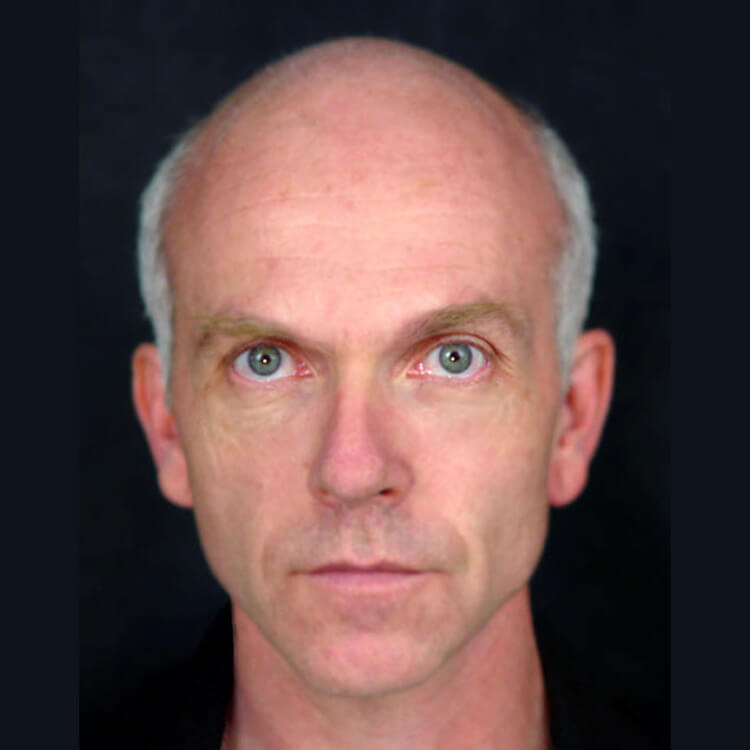
John Oswald (born May 30, 1953 in Kitchener, Ontario) is a Canadian composer, saxophonist, media artist and dancer.

Featured Events

What’s a Rich Text element?

What’s a Rich Text element?

The rich text element allows you to create and format headings, paragraphs, blockquotes, images, and video all in one place instead of having to add and format them individually. Just double-click and easily create content.

The rich text element allows you to create and format headings, paragraphs, blockquotes, images, and video all in one place instead of having to add and format them individually. Just double-click and easily create content.

Static and dynamic content editing

Static and dynamic content editing

A rich text element can be used with static or dynamic content. For static content, just drop it into any page and begin editing. For dynamic content, add a rich text field to any collection and then connect a rich text element to that field in the settings panel. Voila!

A rich text element can be used with static or dynamic content. For static content, just drop it into any page and begin editing. For dynamic content, add a rich text field to any collection and then connect a rich text element to that field in the settings panel. Voila!

How to customize formatting for each rich text

How to customize formatting for each rich text

Headings, paragraphs, blockquotes, figures, images, and figure captions can all be styled after a class is added to the rich text element using the "When inside of" nested selector system.

Headings, paragraphs, blockquotes, figures, images, and figure captions can all be styled after a class is added to the rich text element using the "When inside of" nested selector system.

What’s a Rich Text element?

What’s a Rich Text element?

The rich text element allows you to create and format headings, paragraphs, blockquotes, images, and video all in one place instead of having to add and format them individually. Just double-click and easily create content.

The rich text element allows you to create and format headings, paragraphs, blockquotes, images, and video all in one place instead of having to add and format them individually. Just double-click and easily create content.

Static and dynamic content editing

Static and dynamic content editing

A rich text element can be used with static or dynamic content. For static content, just drop it into any page and begin editing. For dynamic content, add a rich text field to any collection and then connect a rich text element to that field in the settings panel. Voila!

A rich text element can be used with static or dynamic content. For static content, just drop it into any page and begin editing. For dynamic content, add a rich text field to any collection and then connect a rich text element to that field in the settings panel. Voila!

How to customize formatting for each rich text

How to customize formatting for each rich text

Headings, paragraphs, blockquotes, figures, images, and figure captions can all be styled after a class is added to the rich text element using the "When inside of" nested selector system.

Headings, paragraphs, blockquotes, figures, images, and figure captions can all be styled after a class is added to the rich text element using the "When inside of" nested selector system.