John Adams

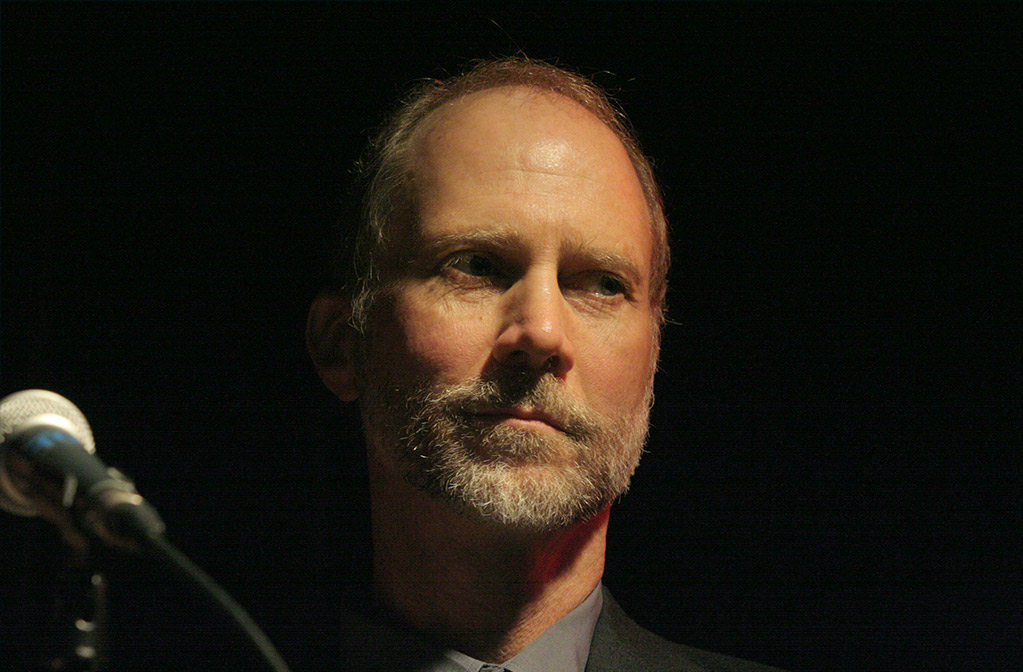
For almost forty years, John Luther Adams made his home in the boreal forest of interior Alaska, where he discovered a unique musical world grounded in space, stillness, and elemental forces.

In the 1970s and into the ’80s, JLA worked full-time as an environmental activist. But the time came when he felt compelled to dedicate himself entirely to music. He made this choice with the belief that, ultimately, music can do more than politics to change the world. Since that time, he has become one of the most widely admired and influential composers in the world, receiving the Pulitzer Prize, a Grammy Award, and many other honors.

In works such as Become Ocean, Become Desert, An Atlas of Deep Time, and Canticles of the Holy Wind, JLA brings the sense of wonder that we feel outdoors into the concert hall. His outdoor works such as Inuksuit, Sila: The Breath of the World, and Crossing Open Ground invite us to remember and reclaim our connections with place, wherever we may be.

Now in his 70s, JLA’s deep concern for the state of the earth and the future of humanity drives him to continue composing. As he puts it: “If we can imagine a culture and a society in which we each feel more deeply responsible for our own place in the world, then we just may be able to bring that culture and that society into being.”

Since leaving Alaska, JLA and his wife Cynthia have lived in the Sonoran Desert of Mexico, the Atacama Desert of Chile, and the Chihuahuan Desert of New Mexico. They now make their home in the Red Centre of Australia.
Featured Events

What’s a Rich Text element?

What’s a Rich Text element?

The rich text element allows you to create and format headings, paragraphs, blockquotes, images, and video all in one place instead of having to add and format them individually. Just double-click and easily create content.

The rich text element allows you to create and format headings, paragraphs, blockquotes, images, and video all in one place instead of having to add and format them individually. Just double-click and easily create content.

Static and dynamic content editing

Static and dynamic content editing

A rich text element can be used with static or dynamic content. For static content, just drop it into any page and begin editing. For dynamic content, add a rich text field to any collection and then connect a rich text element to that field in the settings panel. Voila!

A rich text element can be used with static or dynamic content. For static content, just drop it into any page and begin editing. For dynamic content, add a rich text field to any collection and then connect a rich text element to that field in the settings panel. Voila!

How to customize formatting for each rich text

How to customize formatting for each rich text

Headings, paragraphs, blockquotes, figures, images, and figure captions can all be styled after a class is added to the rich text element using the "When inside of" nested selector system.

Headings, paragraphs, blockquotes, figures, images, and figure captions can all be styled after a class is added to the rich text element using the "When inside of" nested selector system.

What’s a Rich Text element?

What’s a Rich Text element?

The rich text element allows you to create and format headings, paragraphs, blockquotes, images, and video all in one place instead of having to add and format them individually. Just double-click and easily create content.

The rich text element allows you to create and format headings, paragraphs, blockquotes, images, and video all in one place instead of having to add and format them individually. Just double-click and easily create content.

Static and dynamic content editing

Static and dynamic content editing

A rich text element can be used with static or dynamic content. For static content, just drop it into any page and begin editing. For dynamic content, add a rich text field to any collection and then connect a rich text element to that field in the settings panel. Voila!

A rich text element can be used with static or dynamic content. For static content, just drop it into any page and begin editing. For dynamic content, add a rich text field to any collection and then connect a rich text element to that field in the settings panel. Voila!

How to customize formatting for each rich text

How to customize formatting for each rich text

Headings, paragraphs, blockquotes, figures, images, and figure captions can all be styled after a class is added to the rich text element using the "When inside of" nested selector system.

Headings, paragraphs, blockquotes, figures, images, and figure captions can all be styled after a class is added to the rich text element using the "When inside of" nested selector system.