Coral Douglas

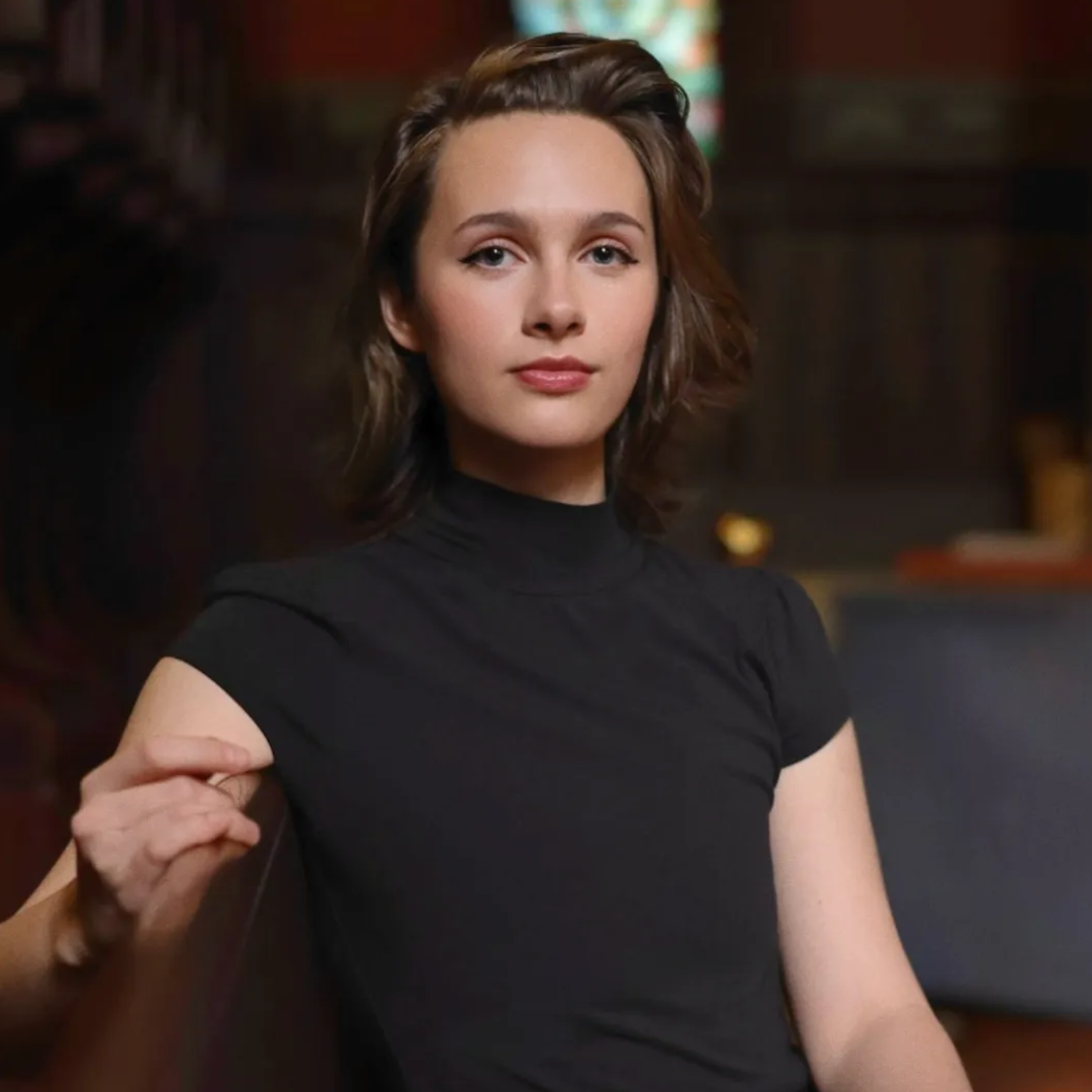
The music of Coral Douglas (b. 1999, they/them) cultivates dreamlike soundworlds, inviting audiences to imagine and fantasize. Douglas' work is informed by somatic methodologies, exploring embodiment, semiotics, and social imagination, and playing with how musical form might shape expectation and desire over time. Douglas' recent projects thematically engage with queerness, environmental conservation, and the attention economy.

Coral has written for TAK Ensemble, Dither Quartet, Splinter Reeds, loadbang, the Rhythm Method, the Trace Chamber Society, Stolen Time, Dawn Upshaw, and Louis Raymond-Kolker. Douglas has premiered works at the Lucerne Festival, Darmstädter Ferienkurse, CCI//Sessions, the Washington State University Festival of Contemporary Art Music, and the MMRC/MARC Festival. Douglas is the recipient of the 2023 Pauline Oliveros New Genre Prize, as well as a NYYS 2022 Commission. Douglas was awarded the Ida M. Vreeland Award in Music in 2022.

Beyond composition, Coral is active as a photographer and visual artist. Douglas firmly believes in the necessity of diverse, engaging music education.

Coral is currently a DMA Composition candidate at Cornell University. They hold an M.M in Music Composition from the University of Nebraska-Lincoln, and a B.M. in Composition and Audio Engineering from LaGrange College. Coral has studied with Elizabeth Ogonek, Marianthi Papalexandri-Alexandri, Greg Simon, Kevin Ernste, Lee Johnson, Marcos Balter, Seth Cluett, and Du Yun.
Featured Events

What’s a Rich Text element?

What’s a Rich Text element?

The rich text element allows you to create and format headings, paragraphs, blockquotes, images, and video all in one place instead of having to add and format them individually. Just double-click and easily create content.

The rich text element allows you to create and format headings, paragraphs, blockquotes, images, and video all in one place instead of having to add and format them individually. Just double-click and easily create content.

Static and dynamic content editing

Static and dynamic content editing

A rich text element can be used with static or dynamic content. For static content, just drop it into any page and begin editing. For dynamic content, add a rich text field to any collection and then connect a rich text element to that field in the settings panel. Voila!

A rich text element can be used with static or dynamic content. For static content, just drop it into any page and begin editing. For dynamic content, add a rich text field to any collection and then connect a rich text element to that field in the settings panel. Voila!

How to customize formatting for each rich text

How to customize formatting for each rich text

Headings, paragraphs, blockquotes, figures, images, and figure captions can all be styled after a class is added to the rich text element using the "When inside of" nested selector system.

Headings, paragraphs, blockquotes, figures, images, and figure captions can all be styled after a class is added to the rich text element using the "When inside of" nested selector system.

What’s a Rich Text element?

What’s a Rich Text element?

The rich text element allows you to create and format headings, paragraphs, blockquotes, images, and video all in one place instead of having to add and format them individually. Just double-click and easily create content.

The rich text element allows you to create and format headings, paragraphs, blockquotes, images, and video all in one place instead of having to add and format them individually. Just double-click and easily create content.

Static and dynamic content editing

Static and dynamic content editing

A rich text element can be used with static or dynamic content. For static content, just drop it into any page and begin editing. For dynamic content, add a rich text field to any collection and then connect a rich text element to that field in the settings panel. Voila!

A rich text element can be used with static or dynamic content. For static content, just drop it into any page and begin editing. For dynamic content, add a rich text field to any collection and then connect a rich text element to that field in the settings panel. Voila!

How to customize formatting for each rich text

How to customize formatting for each rich text

Headings, paragraphs, blockquotes, figures, images, and figure captions can all be styled after a class is added to the rich text element using the "When inside of" nested selector system.

Headings, paragraphs, blockquotes, figures, images, and figure captions can all be styled after a class is added to the rich text element using the "When inside of" nested selector system.